The Allergies Tracker: A Practical Tool for Identifying and Managing Triggers
Living with allergies often feels like a constant guessing game. One day a certain food seems fine, and the next it triggers a reaction. The same unpredictability applies to environmental factors like pollen, mold, or pet dander. Without a systematic method to record symptoms and potential causes, it becomes difficult to pinpoint what is actually causing the problem. That is where a structured tracking system becomes valuable. The Allergies Tracker offers a straightforward, paper-based approach to logging daily exposures and reactions, helping users build a clearer picture over time.
Why Tracking Allergies Matters
Allergy management typically relies on memory and intuition, but human recollection is unreliable, especially when symptoms overlap or appear hours after exposure. A written log introduces accountability and pattern recognition. By recording what you eat, where you go, and how you feel each day, you create a dataset that reveals correlations you might otherwise miss. This is particularly useful for recurring but sporadic symptoms such as skin rashes, sinus congestion, digestive issues, or fatigue.
The Allergies Tracker is designed specifically for this purpose. It provides a dedicated space to note daily inputs and outputs, so nothing gets overlooked. Over weeks or months, the accumulated entries can help you identify whether shellfish, dairy, pollen, mold, or something else is the likely culprit. For parents tracking a child's symptoms, the record becomes an invaluable reference for pediatricians and allergists, reducing the guesswork during consultations.
What the Allergies Tracker Offers
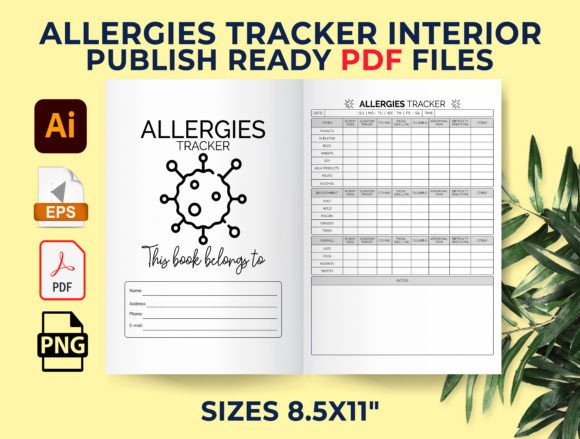
The tracker is a physical journal with specific dimensions and formatting choices that support consistent use. Its key characteristics include a page size of 8.5 inches by 11 inches, which is a standard letter size, and 120 pages of tracking content. This provides enough room for several months of daily entries without feeling overwhelming or cluttered.
Physical Format and Layout
The larger page size offers more space per day than many compact journals, which is a practical advantage if you prefer to write detailed notes. Each page follows a per-day format, meaning you log one day per page or spread, depending on how you set it up. The bleed and no-bleed options suggest that the design accommodates both full-page printing and margin-safe layouts, giving you flexibility if you print it yourself or have it printed professionally. At 300 DPI resolution, the text and lines remain crisp and clear, which is especially helpful if you are scanning or photocopying pages for sharing with a healthcare provider.
Tracking Method and Daily Use
The simple tracking approach is one of its strongest features. There is no complex scoring system, no color coding that requires extra supplies, and no subjective rating scales that vary from person to person. Instead, you get structured space to record the basics: what you ate, what you were exposed to, any symptoms experienced, and the time of day. A dedicated notes area allows for additional observations such as medication taken, sleep quality, exercise, or stress levels, all of which can influence allergic responses.
This straightforward method works well for busy adults who do not have time to learn a complicated system. It also suits parents who need to quickly jot down information about their child's day without flipping through multiple sections. The consistency of the daily format encourages habit formation, and after a few weeks, the act of logging becomes second nature.
Additional Components and Design
The inclusion of an intro page is a thoughtful touch. It sets expectations and explains how to use the tracker effectively, which reduces the initial learning curve. The unique design language avoids looking like a generic medical form, so it feels more personal and less clinical. For those who want to customize further, the package includes PDF, AI, EPS, and PNG files, along with KDP-tested formatting that ensures compatibility with print-on-demand platforms. This level of flexibility makes it suitable for personal use, small-scale printing, or even resale if you are a content creator or publisher.
Real-World Use Cases and Practical Value
Imagine a professional in their 30s who experiences intermittent hives and has never been able to confirm whether the trigger is gluten, a particular preservative, or seasonal pollen. Using the Allergies Tracker, they log meals, outdoor activities, and symptoms for six weeks. Reviewing the entries reveals that hives consistently appear within four hours of eating at restaurants that use soy-based sauces. That pattern would have been easy to miss without a record, because the reaction is delayed and the meals varied widely.
Another example is a parent of a preschooler with recurrent eczema flare-ups. By tracking the child's diet, bath products, and play environments, the parent notices a strong correlation between flare-ups and days spent at a friend's house that has a cat. The tracker confirms the suspicion, and the parent can then discuss allergen avoidance strategies with the child's doctor. In both cases, the journal serves as objective evidence rather than subjective memory, which strengthens the conversation with medical professionals.
For educators, small business owners, and freelancers who work from home, the tracker can also help distinguish between allergy symptoms and other health issues like colds or stress-related fatigue. When you see a pattern of congestion only on days with high pollen counts, you gain confidence that it is allergies, not a recurring illness. This reduces unnecessary worry and helps you plan your environment more effectively, such as running an air purifier during peak seasons.
Who Benefits Most from This Tracker
The Allergies Tracker is not a medical device or a diagnostic tool, but it is a practical resource for anyone who wants to take a systematic approach to allergy management. It is especially valuable for:
- Adults managing multiple potential triggers. If you suspect several foods or environmental factors are at play, the daily log helps isolate the most likely ones without relying on expensive testing upfront.
- Parents tracking children's allergies. Children often cannot articulate how they feel, so a parent's observations become the primary data source. The tracker provides a structured way to capture these details.
- People with intermittent or delayed reactions. Symptoms that appear hours after exposure are notoriously hard to link to a cause. A written record bridges that gap.
- Healthcare professionals and educators. Pediatricians, allergists, and school nurses can use completed logs as reference material during assessments, especially when a patient's history is incomplete.
- Content creators and publishers. The provided digital files (PDF, AI, EPS, PNG) and KDP-ready formatting make it easy to produce and sell printed trackers as a resource for one's audience.
Quality, Design, and Long-Term Considerations
The high-resolution files ensure that printed pages are sharp and easy to read, which matters when you are writing quickly or reviewing entries weeks later. The standard 8.5 x 11 inch size fits into most binders and filing systems, so you can store completed logs alongside other health records. The 120-page count offers a practical balance between depth and portability; it is thick enough to cover several months but not so large that it becomes cumbersome.
One design choice worth noting is the absence of bleed in one version, which means you can print without worrying that elements will be cut off at the edges. This is a small but meaningful detail for anyone who prints at home on standard paper. The no-bleed option also makes the file compatible with a wider range of printers and paper sizes, reducing waste from misprints.
From a durability perspective, the trackers are likely to hold up well if printed on decent paper stock. The simple layout means you will not outgrow the system as your tracking needs evolve. If you decide to expand your logging to include additional categories, the notes section gives you room to adapt without needing a completely new format.
Limitations and What to Consider Before Buying
No tool is perfect, and the Allergies Tracker has a few important limitations. First, it is a physical journal in a digital world. If you prefer digital tracking, syncing with an app, or automatically generating charts, this will not meet those needs. It is designed for people who are comfortable writing by hand and reviewing paper records.
Second, the per-day format assumes a certain level of consistency. If your schedule is highly irregular or you travel frequently, you may find that some days are incomplete or skipped entirely. The journal does not penalize gaps, but the usefulness of the data depends on how regularly you fill it out. Missing several days in a row reduces the pattern-recognition value.
Third, the tracker is a log, not a diagnostic tool. It helps you identify correlations, but it cannot confirm allergies on its own. You will still need professional testing for definitive answers. The journal is best used as a supporting document, not a replacement for medical advice.
Finally, the 120-page count may feel either too short or too long depending on your tracking style. Some users may wish for more pages to cover a full year, while others might prefer a smaller, more portable version. Since the files are provided in editable formats, you could modify the page count yourself if you have the right software, but that requires additional effort beyond simply printing and using the tracker.
Final Observations on the Allergies Tracker
The Allergies Tracker fills a specific niche well. It is a no-frills, practical resource for anyone who wants to take control of their allergy management through consistent observation and record keeping. Its strengths lie in its simplicity, its flexible file formats, and its thoughtful layout choices that make daily logging easy. While it will not suit everyone, particularly those who prefer digital solutions or need a more guided diagnostic approach, it offers genuine value for the audience it targets. If you have struggled to identify your triggers or have felt overwhelmed by the complexity of tracking food and environment, this tool provides a clear and manageable starting point. The act of writing things down, day after day, is often the first step toward understanding what your body is telling you.