Meeting Agenda for KDP: A Practical Tool for Better Meetings
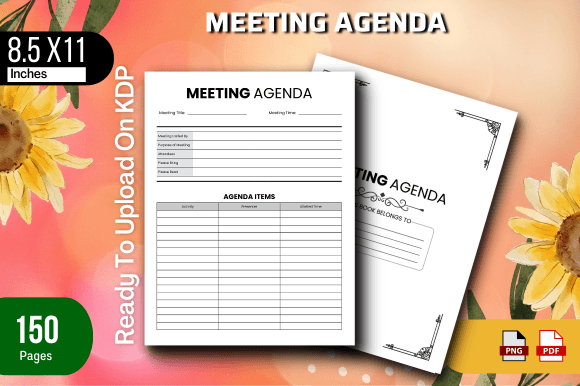
If you have ever sat through a meeting that meandered for an hour without reaching a clear decision, you already know why structure matters. A good agenda is not a bureaucratic formality. It is a time-saving device that helps people stay focused, prepared, and accountable. That is exactly what Meeting Agenda for KDP offers: a ready-to-upload interior designed for Amazon Kindle Direct Publishing, giving you 150 pages of agenda templates in a simple, print-ready format. But beyond the numbers, what does this actually mean for someone running meetings, planning sessions, or coordinating teams?
Let us walk through what this product is, how different people use it in real situations, and what you should think about before adding it to your KDP catalog or using it yourself.
What Meeting Agenda for KDP Actually Is
At its core, Meeting Agenda for KDP is a formatted interior file that you can upload directly to Amazon KDP to create a printed agenda book. It comes as a ready-to-upload PDF, an 8.5 x 11 inch layout, and includes 150 total pages. The file has been tested on Amazon KDP to ensure the formatting holds up during the publishing process. There is also a PNG image included, which makes cover design or preview generation easier.
This is not a complicated software tool or a course. It is a straightforward printable agenda book that helps meeting organizers keep track of topics, time slots, attendees, action items, and follow-ups. The value lies in its simplicity and reliability. You do not need to design anything from scratch. You just upload, publish, and either sell it as a low-content book or print it for your own use.
Where People Use a Meeting Agenda Book
The most obvious setting is the workplace. Small business owners, freelancers, and team leads often run recurring meetings that benefit from a consistent format. Instead of scribbling notes on scrap paper or opening a new document each time, they grab a dedicated agenda book. Each meeting gets its own spread. Over time, the book becomes a physical record of decisions, deadlines, and who said they would do what.
But the use cases extend beyond the office. Educators who lead parent-teacher conferences or department meetings can use a structured agenda to keep conversations on track. Nonprofit coordinators juggling multiple committees appreciate having a single book where every agenda lives. Even hobbyists organizing a local club, a book club, or a community garden committee find that a printed agenda helps people take the meeting seriously.
Then there are coaches and consultants. If you run group coaching calls, strategy sessions, or client workshops, you can use the agenda book to prepare before each call and take notes during it. Clients notice when you are organized. It builds trust.
Why People Choose a Printed Agenda Over Digital Tools
You might wonder why anyone would use a printed book when apps like Notion, Asana, or Trello exist. The answer is simple: not everyone wants digital clutter. Many people prefer writing by hand because it helps them remember information better. Others work in environments where screens are distracting or discouraged. A printed agenda book sits open on the table. It does not ping you with notifications. It does not require a battery. It is always there.
For KDP publishers, this is also a practical product to sell because the demand for low-content books remains steady. Planners, journals, and agenda books consistently sell because people keep coming back for new ones every year. Meeting Agenda for KDP fits neatly into that category.
Freelancers and Solo Creatives
If you are a freelance designer, writer, or marketer, you probably meet with clients regularly. A one-hour kickoff call can easily turn into a rambling conversation if you do not have a clear agenda. With a printed agenda book, you can prepare three or four topics before the call. During the meeting, you jot down client feedback, deadlines, and next steps. Afterward, you have a physical record you can refer back to. No digging through chat logs or email threads.
Freelancers also use these books to plan internal meetings with themselves. Weekly planning sessions, project reviews, and goal-setting check-ins all benefit from the same structured format.
Small Business Owners
Running a small team means wearing many hats. You might lead a weekly standup, a monthly strategy review, and quarterly planning sessions. Having a dedicated agenda book for each type of meeting keeps your notes organized. Over time, you can flip back through the book and see how decisions evolved. This is useful for tax preparation, performance reviews, or simply remembering why you made a certain choice six months ago.
Small business owners also appreciate that the agenda book can serve as a liability tool. If a disagreement arises about what was decided, you have written proof from the meeting itself.
Educators and School Administrators
Teachers and administrators attend a surprising number of meetings. Department meetings, staff meetings, IEP meetings, parent conferences, curriculum planning sessions. Each one requires preparation and follow-up. A printed agenda book helps you walk into each meeting with a clear plan. You can assign time limits to each topic so the meeting does not run overtime. Afterward, you record action items and who is responsible for them.
This is especially helpful for educators who prefer not to use laptops during meetings because they want to model active listening for students and parents.
Community and Volunteer Groups
Volunteer-run organizations often struggle with consistency. People rotate in and out, and institutional memory gets lost. A printed agenda book creates a simple paper trail. Each meeting leaves behind a record of what was discussed and what was agreed upon. This helps new volunteers get up to speed quickly. It also keeps meetings efficient, which matters when everyone is donating their time.
Book clubs, neighborhood associations, parent-teacher groups, and hobby clubs all benefit from this kind of structure.
Coaches, Consultants, and Trainers
If you run group programs or one-on-one consulting, you likely have a standard session structure. Using an agenda book helps you stay consistent across clients. You can prepare the same agenda template for each session, then customize it with client-specific notes. Over time, you build a library of past sessions that you can review when preparing for the next meeting.
This is also useful for tracking client progress. You can look back at what was discussed three months ago and see how the conversation has evolved.
What to Consider Before Buying or Publishing Meeting Agenda for KDP
Before you upload this interior to KDP, there are a few practical things to think about. First, consider your audience. Who would buy a printed meeting agenda book? The answer is not everyone. But if you target professionals, small business owners, educators, and volunteer leaders, you have a clear market.
Second, think about the cover design. The interior is ready to upload, but you still need an appealing cover. Since the product includes a PNG image, you have a head start. But make sure your cover communicates the practical value of the book. Use imagery that suggests professionalism, organization, and simplicity.
Third, consider the size. The 8.5 x 11 inch format is standard for office use. It fits in most briefcases and on most desks. But if you want to target a more portable audience, you could consider creating a smaller version later. For now, the standard size works well for people who keep the book on their desk or in their meeting room.
If you are buying this for your own use, think about how many meetings you run per week. At 150 pages, this book will last a while. But if you run multiple meetings each day, you might need multiple books or a thicker option. The page count is generous enough for most small teams and solo users.
Also consider the binding. Since this is a KDP print book, the binding will be standard paperback. That works fine for desk use. But if you plan to carry it around frequently, you might want to reinforce the spine or choose a more durable cover stock during setup.
How the Features Connect to Real Outcomes
The ready-to-upload PDF means you do not need design skills. That saves you hours of formatting work. The 8.5 x 11 inch size means the book fits into a standard office environment. The 150 pages give you enough room for a full year of weekly meetings or a few months of daily standups. The tested KDP compatibility means you will not run into formatting errors during the publishing process. The included PNG image helps you create a professional-looking cover without hiring a designer.
For the end user, these features translate into a simple experience. They buy the book, it arrives, and they start using it immediately. No setup, no learning curve, no digital subscription. They open the book, write the date, list the topics, and run their meeting. That is the kind of practicality that keeps people coming back to low-content books.
Final Observations on Meeting Agenda for KDP
Meeting Agenda for KDP fills a specific niche. It is not for everyone, but for the people who need it, it solves a real problem. Meetings are a part of modern life, and running them well requires preparation. A printed agenda book is one of the simplest ways to bring structure to a chaotic schedule.
Whether you are a KDP publisher looking for another interior to add to your catalog, a freelancer trying to stay organized, a teacher managing multiple meetings per week, or a volunteer leader keeping a community group on track, this product offers a straightforward solution. It does not promise to transform your productivity overnight. It just gives you a reliable place to write down your plan before the meeting starts and your notes after it ends.
And sometimes, that is exactly what you need.