Kakuro Puzzles Activity Book Part 18
A Fresh Take on the Number-Cross Challenge
If you have spent any time with puzzle books, you know the format can feel repetitive after a while. Word searches, crosswords, sudoku—they all have their place. But every so often a puzzle type arrives that feels like a genuine hybrid, borrowing the best parts from two classics. That is exactly what you get with Kakuro Puzzles Activity Book Part 18. It sits somewhere between a crossword and a sudoku, and it rewards the kind of logical thinking that keeps your brain sharp without feeling like homework.
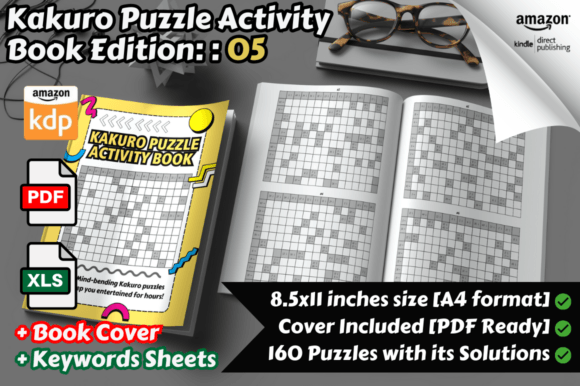
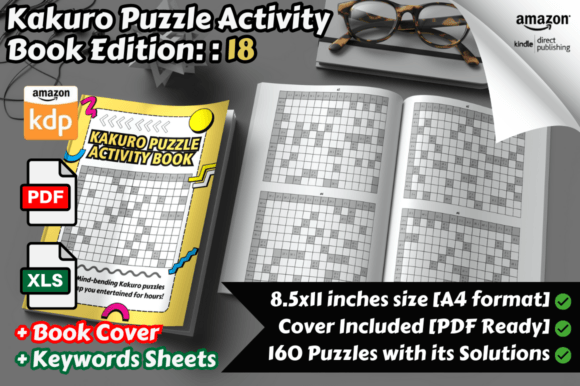
Visually, this book is clean and intentional. The interior layout uses a professionally designed PDF file at 8.5 by 11 inches, which means the grid cells are large enough to write in comfortably. That might sound like a small detail, but if you have ever tried to solve a cramped puzzle on a cheap paperback page, you know how quickly frustration sets in. The margins are generous, the numbers are legible, and the overall look is understated. There is no unnecessary ornamentation—just the grid, the clue sums, and your own pencil marks. That restraint is part of why it works so well for adults who want focus, not distraction.
The cover file is also included in the package, and it follows the same philosophy: polished without being loud. Whether you are publishing this yourself or planning to bundle it with other activity books, the design language is flexible enough to fit into a series or stand alone on a digital storefront.
Why Kakuro Appeals to Logical Thinkers
Kakuro is often described as a cross between a crossword and sudoku, but that undersells what makes it unique. In a standard crossword, you rely on vocabulary and general knowledge. In sudoku, you work with placement and elimination. Kakuro asks you to do both, but with numbers instead of letters. Each row and column has a sum you must reach, and you have to figure out which combination of digits fits without repeating any number in a given run.
What makes Kakuro Puzzles Activity Book Part 18 particularly satisfying is the pacing. The puzzles start at a level that feels accessible even if you have never tried kakuro before. Early grids are smaller, and the clue sums guide you toward obvious starting points. As you move through the book, the puzzles grow in complexity. By the time you reach the later pages, you are juggling multiple constraints at once, which is where the real mental workout happens. The book includes 80 pages of puzzles and a matching 80 pages of solutions, so you can check your reasoning without having to flip to a separate section at the back. That layout choice matters more than you might think—it keeps the solving experience fluid and reduces the temptation to peek prematurely.
For anyone in the creative or publishing space, this structure also makes the book easy to test and validate. You can print a few pages, hand them to friends or colleagues, and gauge difficulty levels before committing to a full print run. The Excel spreadsheet of keywords included with the package is a practical bonus if you are listing this on a marketplace or optimizing a product page. It saves you the tedious work of brainstorming search terms from scratch.
Where This Book Fits Into a Product Line
If you are a publisher, content creator, or small business owner looking to expand your catalog of activity books, Kakuro Puzzles Activity Book Part 18 fills a specific niche. The puzzle market is crowded, but kakuro is still underrepresented compared to sudoku or crosswords. That gives it a natural discoverability advantage—people searching specifically for kakuro are often frustrated by the limited options, so a well-designed book stands out immediately.
This book works well as a standalone product, but it also pairs nicely with other logic-based titles. If you already sell sudoku or KenKen books, adding a kakuro volume gives your returning customers something new to try. The digital PDF format means you can sell it as a printable download, offer it as a bonus for email subscribers, or use it as a lead magnet for a puzzle-related website. The 8.5 by 11-inch size is standard for home printers, so there is no awkward scaling or trimming required on the buyer's end.
From a branding perspective, the visual consistency of this book helps you build recognition. The cover and interior share a coherent style, which matters if you are building a series. Customers who enjoy the first volume will feel confident picking up Part 18, knowing the quality and layout remain consistent. That kind of trust is hard to earn, and it starts with small details like font choice, spacing, and grid clarity.
Practical Considerations for Publishers and Designers
Let me share a few observations from working with similar puzzle book formats. The most common mistake I see is underestimating how much white space matters. A dense page with tiny numbers and no breathing room might save paper, but it alienates a large portion of your audience—especially adults over 35 who may need slightly larger print. Kakuro Puzzles Activity Book Part 18 avoids that trap by keeping the grid well proportioned and the type size readable. If you are adapting this file or using it as a template for your own projects, keep that principle front and center.
Another consideration is the binding. If you plan to print physical copies, make sure the margins are wide enough that the puzzle near the spine remains flat and accessible. The PDF layout here accounts for that, but it is worth testing with your specific printer or print-on-demand service before you go to production. A puzzle that curves into the gutter is nearly impossible to solve without breaking the spine.
For digital distribution, the PDF format works as-is. No special fonts or plugins are required, and the file size is reasonable enough to email or host on a download page. If you want to offer a preview, you can easily extract a few sample pages to show the grid style and difficulty progression. That transparency builds trust with potential buyers who want to see what they are getting before they purchase.
Readability and the Solving Experience
I want to emphasize the readability aspect because it directly affects how long someone stays engaged with the book. A puzzle that is hard to read because of poor contrast, cramped cells, or inconsistent numbering creates friction. The solver ends up spending more time deciphering the layout than actually thinking through the logic. That is a recipe for abandonment, especially for casual solvers who are not yet committed to the kakuro format.
This book uses a straightforward numeric display with clear separation between clue sums and the grid cells. The clue numbers are placed in the triangular corners of each block, which is the standard kakuro convention, and they are large enough to read at a glance. The solution pages mirror the same layout, so cross-referencing is intuitive. If you are evaluating this as a template for your own puzzle books, pay close attention to how the clue sums are positioned. Even a small offset can create confusion when you are scanning across the grid.
Another detail worth noting is the paper-friendly design. The lines are crisp but not too heavy, which means they print well on standard office paper without bleeding through to the next page. If you are selling this as a digital file, your customers will appreciate that they can print at home without wasting ink or struggling with faint lines.
Who Benefits Most From This Puzzle Style
Kakuro has a unique appeal for adults who enjoy structured problem solving. It attracts people who like crosswords but wish they had a more systematic approach, and it appeals to sudoku fans who want something that demands more flexible reasoning. I have seen it work well for commuters who want a focused activity during a train ride, for retirees who enjoy keeping their mind active, and even for families looking for a screen-free activity that multiple generations can participate in together.
For entrepreneurs and small business owners, puzzle books like this one also serve as excellent client gifts or promotional items. A branded kakuro book with your company logo on the cover is memorable and useful. It does not end up in the trash like a generic pen or keychain. It sits on a desk or a coffee table, and every time someone picks it up, they are reminded of your business. That kind of lasting visibility is rare in promotional giveaways.
If you are a blogger or content creator, you can use the puzzle format as a way to build community. Post a weekly kakuro puzzle from the book on your site or social media, and invite followers to share their solutions or ask for hints. It creates a natural engagement loop without requiring you to constantly produce original content. The book becomes a library of material you can draw from for months.
Final Thoughts on Choosing the Right Puzzle Book Format
Kakuro Puzzles Activity Book Part 18 is a solid example of how a well-structured activity book should look and feel. It respects the solver's time by using a clean layout, appropriate difficulty progression, and practical formatting that works equally well in digital and print formats. For publishers, it offers a ready-to-use product that fits into an existing catalog or stands alone as a new offering. For individual solvers, it provides hours of focused engagement without the frustration of poor design.
If you are considering adding a kakuro book to your product line or simply want to explore this puzzle type for your own enjoyment, this volume is a strong starting point. The combination of 80 puzzles, 80 solution pages, and the included keyword spreadsheet removes most of the guesswork from production and marketing. You can focus on what matters most: delivering a satisfying solving experience that keeps people coming back for more.