Autumn Dot Marker Activity Book Volume 2 Guide
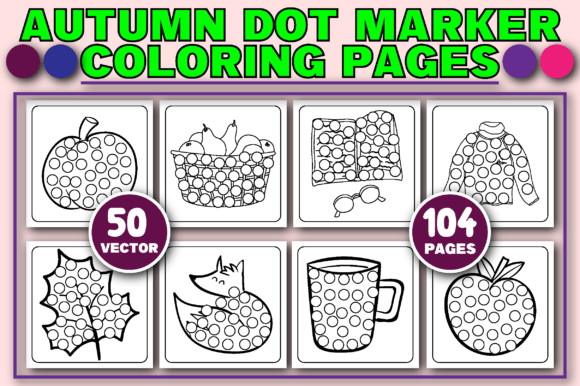
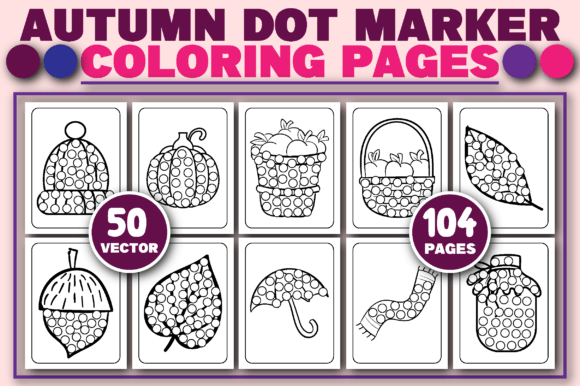
If you create or publish children’s activity content, you know the difference between a generic fill-in book and one that truly engages. Autumn Dot Marker Activity Book Volume 2 falls squarely into the latter category. With 50 original illustrations built around the fall season, this interior download offers a ready-to-use foundation for educational play, creative exploration, and even commercial publishing on Amazon KDP. But beyond the simple appeal of dot markers, this volume opens up a surprising range of possibilities for educators, designers, small business owners, and anyone looking to produce high-quality content efficiently.
What makes this volume stand out is not just the number of pages, but the intentional design choices baked into each illustration. Every image is crafted to fit a standard A4 or 8.5×11″ inch page, so scaling, printing, and formatting remain consistent. You receive the files in PDF, AI, EPS, JPG, and PNG formats, all at 300 dpi print-ready resolution. That means you can move from download to listing or classroom use without spending hours adjusting dimensions or cleaning up raster artifacts. The entire package is fully tested on Amazon’s Kindle Direct Publishing platform, removing the guesswork for anyone building a high-content book business.
Yet the real value lies in how you use these illustrations. This article explores practical ways to adapt, extend, and personalize Autumn Dot Marker Activity Book Volume 2 for different audiences, platforms, and creative goals. Whether you are a parent looking for screen-free play, a teacher building seasonal lesson plans, or a publisher packaging a new listing, the ideas below will help you get the most out of each page.
What the Autumn Dot Marker Activity Book Volume 2 Offers
Before diving into applications, it helps to understand the core structure. The volume contains 50 autumn-themed dot marker illustrations, each designed for dot markers, bingo daubers, or even finger painting. The themes naturally center around fall: leaves, pumpkins, acorns, woodland animals, harvest scenes, and seasonal patterns. Each page is a single illustration, not a collage of tiny elements, which means young children can focus without feeling overwhelmed.
The included file formats give you flexibility across workflows:
- PDF – ready for direct upload to KDP or print-on-demand services
- AI and EPS – editable vector files for customizing colors, resizing elements, or repositioning artwork
- JPG and PNG (300 dpi) – high-resolution raster files for previews, mockups, or social media promotion
This variety matters because it allows you to treat the volume as both a finished product and a modular toolkit. You can take a single illustration, export it as a PNG, and use it in a blog post about fine motor activities. Or you can open the AI file, adjust the dot sizes to suit different marker brands, and re-export an entire modified edition. The design is solid enough to use as-is and flexible enough to evolve.
For Parents and Caregivers Seeking Low-Prep Activities
One of the most natural uses for this volume is at home with preschoolers and kindergarteners. Autumn is a busy season, and parents often need quick, mess-contained activities that don’t require elaborate setup. Dot marker pages fit that brief perfectly. Hand a child a page and a set of washable dot markers, and they can work independently for 15 to 20 minutes while you manage other tasks.
What makes Autumn Dot Marker Activity Book Volume 2 especially useful here is the seasonal variety. Instead of repeating similar shapes across 50 pages, the illustrations alternate between simple objects (a single leaf, an acorn) and more complex scenes (a scarecrow in a field, a basket of apples). This variety keeps children engaged across multiple sessions. You can also use the pages to reinforce vocabulary: ask the child to name each object before they start dotting, or turn the activity into a color identification game by requesting specific dot colors for certain elements.
For parents who want to extend the activity, the high-resolution PNG files make it easy to print the same page multiple times. A child can complete a page, then try again with a different color scheme, comparing their two versions. This repetition builds confidence and fine motor control without requiring new material.
For Early Childhood Educators and Homeschoolers
Teachers working with children aged 3 to 6 will find the volume aligns well with fine motor development goals and thematic unit planning. The autumn theme fits naturally into September, October, and November lesson plans, especially around harvest, weather changes, and seasonal celebrations.
Here are a few ways educators can adapt the illustrations for classroom or homeschool use:
- Color-coded instructions: Print a page with small colored circles next to each object, guiding children to match the dot color to the instruction. This adds a pre-reading or color-matching challenge.
- Counting practice: Ask children to count how many dots they placed inside a pumpkin or how many leaves are on a tree illustration. The dot marks become physical counters.
- Fine motor stations: Set up a rotation with different dot marker sizes (small, medium, large tips). Children experience how pressure and tool choice affect dot shape and coverage.
- Collaborative murals: Print several pages on larger paper, let each child complete one, then assemble them into a classroom autumn display.
Because the AI and EPS files are editable, you can also modify the illustrations to add dotted outlines for tracing, or simplify complex scenes for younger students. The vector format lets you adjust without losing resolution, which is a major advantage over fixed raster graphics.
For KDP Publishers and Content Creators
If you are building a high-content book business on Amazon, time efficiency and quality control are everything. Autumn Dot Marker Activity Book Volume 2 arrives fully tested on the KDP platform, which means you avoid the common pitfalls of improper bleed, low resolution, or formatting errors that lead to rejection or poor print quality.
You have several options for bringing this to market:
- List as-is: Upload the PDF directly to KDP. The 50-page count positions it competitively in the activity book category. Write a focused description emphasizing the autumn theme, fine motor benefits, and no-mess play.
- Create a series: Use this as Volume 2 in a seasonal series. Pair it with a spring, summer, and winter dot marker volume. Customers who enjoy one season are likely to buy the full set.
- Bundle with other formats: Offer a paperback version alongside a digital download on other platforms. The JPG and PNG files make it easy to create a separate, printable PDF for teachers who want to license single-use copies.
- Customize for niche audiences: Because you have editable vector files, you can replace certain elements to target specific regions or cultural celebrations. For example, adapt the harvest scenes to include local produce or traditional autumn customs.
One practical note: when listing on KDP, use the internal file preview to show a few representative pages. The 300 dpi resolution means your previews will look crisp on screen, which builds trust with potential buyers. Also, consider adding a brief “How to Use” page at the beginning of the book, explaining that dot markers, bingo daubers, or even cotton swabs with paint can be used. This small addition reduces confusion and increases customer satisfaction.
For Designers and Creative Entrepreneurs
Even if you are not publishing on KDP, the files in this volume can serve as components for larger projects. The transparent PNG images, for instance, can be used in digital resources:
- Educational printables for Etsy or Teachers Pay Teachers
- Social media templates featuring autumn dot art for preschool activity ideas
- Merchandise mockups such as tote bags or placemats with dot marker patterns
- Coloring app assets for children’s digital drawing apps (with proper licensing)
The vector files give you control over stroke weight, dot spacing, and overall composition. If you want to create a variation where dots are replaced with numbered circles (for a paint-by-number style activity), the AI file makes that straightforward. Similarly, you can combine multiple illustrations into a single larger scene for a poster or wall chart.
Because the illustrations are consistent in style and scale, they work well as a cohesive set. You could create a full autumn activity bundle that includes dot marker pages, matching cards, and cut-out shapes, all derived from the same source files. This consistency strengthens your brand and reduces the visual randomness that sometimes plagues bundled resources.
Practical Tips for Keeping Results Clear and Effective
Regardless of how you use the volume, a few practical habits will help you maintain quality across print and digital output:
- Test print before publishing. Even though the files are print-ready, paper type and ink can affect dot marker bleeding. Print a sample page on the paper you intend to use, then test with the markers you recommend. Adjust if needed.
- Export at original resolution. When converting between formats, avoid downscaling. The 300 dpi raster files are already optimized; scaling them down introduces artifacting. If you need smaller file sizes for web use, keep a separate export set.
- Maintain contrast. Dot marker illustrations rely on clear outlines. If you modify the vector files, ensure that the stroke color is dark enough against the paper background. Light gray lines may not show through heavier dot applications.
- Consider bleeding for physical books. If you are producing a paperback, the KDP-ready PDF should already include proper margins. Double-check that no illustration elements fall into the gutter area, especially for images that span across a spread.
- Keep a master file. When you start customizing, work from a copy of the original AI or EPS file. This way you always have a clean source to fall back on if a modification goes off track.
These may sound like small details, but they make the difference between a product that feels professional and one that feels rushed. Especially in the educational and publishing markets, consistency and print quality directly affect reviews and repeat purchases.
Adapting the Volume for Different Formats and Platforms
While the primary use case is a print activity book, the file formats allow for cross-platform distribution. Here are a few adaptation ideas:
- PDF for tablet drawing apps: Import the PDF into apps like Procreate or GoodNotes, and children can dot digitally using a stylus. This works well for travel or situations where physical markers are impractical.
- Individual PNG downloads: Offer single pages as low-cost digital items. Parents might want just the pumpkin page or the leaf page rather than a full book.
- Print-on-demand greeting cards: Take a single illustration, resize it to card dimensions, and sell seasonal card sets on POD platforms. The autumn theme aligns with Thanksgiving, Halloween, and general fall greetings.
- Classroom licenses: If you are an educator creating materials for multiple classrooms, the editable files let you add school branding, remove copyrighted elements, or adjust complexity for different grade levels.
Each adaptation extends the lifespan of the content. The 50 illustrations are not a one-time resource; they are a base you can remix and repackage as your audience or business evolves.
Final Thoughts on Using This Volume Purposefully
Autumn Dot Marker Activity Book Volume 2 succeeds because it does not try to be everything at once. It focuses on a specific season, a specific activity type, and a specific quality standard. That focus makes it easy to integrate into existing workflows, whether you are a parent looking for a rainy afternoon activity or a publisher building a catalog of children’s books.
Start by opening the files and leafing through the illustrations. Notice which ones invite the most interaction. A simple leaf outline can become a lesson in symmetry, color mixing, or counting. A detailed harvest scene can spark conversations about where food comes from. The best use of this volume is not just to hand a child a marker, but to use each page as a small invitation to observe, choose, and create.
For creators and publishers, the practical value lies in the time saved and the flexibility retained. You are not locked into a single format. You can print, edit, resize, and repurpose without starting from scratch. The 50 illustrations are tested, clean, and ready. What you build around them is up to you.