Astronomy Observation Book – A Practical KDP Interior for Your Publishing Workflow
Low-content publishing on Amazon KDP continues to attract creators who understand the value of structure, formatting, and audience fit. Among the many niche categories available, astronomy observation journals and logbooks have found a steady audience of stargazers, amateur astronomers, educators, and parents looking for guided note-taking tools. The Astronomy Observation Book – KDP Interior is one such asset designed to meet that demand with a ready-to-use format that removes most of the technical friction from the publishing process. This article offers a practical evaluation of its specifications, usability, flexibility, and overall fit for different types of publishers.
What the Astronomy Observation Book – KDP Interior Offers
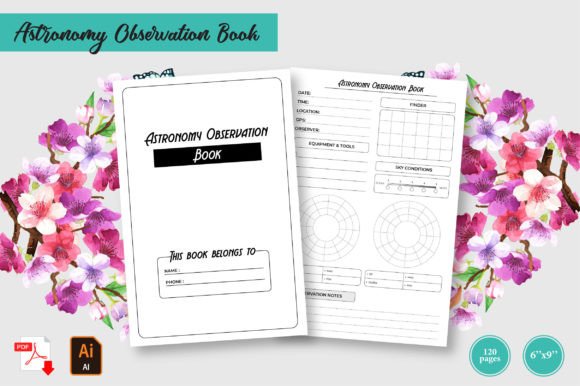
At its core, this interior file is a pre-designed template for creating a printed observation logbook. It is purpose-built for the KDP platform, which means the dimensions, margins, and page count align with Amazon's printing requirements. The specifications include a 6x9 inch trim size, 120 pages, and a set of file formats that cover most production workflows: JPEG, PDF, and editable Adobe Illustrator files. Bleed is not applicable here, which simplifies setup for interiors that do not require color extending to the edge of the page.
The interior is marketed as 100 percent formatted and tested, and it is also fully editable and customizable. This is a significant point for publishers who want to tweak layouts, adjust prompts, or rebrand the logbook for their own audience. The inclusion of Illustrator source files means that anyone comfortable with vector design software can modify colors, rearrange elements, or add new sections without starting from scratch.
Key Characteristics and Design Approach
The design of an observation book for astronomy needs to balance clarity with enough structure to guide users through recording data such as date, time, location, equipment used, sky conditions, and observations. A well-designed interior does not overwhelm the user with too many fields, but it also does not leave too much empty space that feels unstructured. The Astronomy Observation Book – KDP Interior appears to follow this principle by providing organized layouts that encourage consistent note-taking while remaining visually clean.
Because the interior is provided in multiple formats, publishers can choose their preferred method of editing. The PDF version is ready to upload directly to KDP with no additional work, making it ideal for those who want a quick launch. The editable Illustrator files provide a layer of flexibility that is valuable for creators who want to customize headers, add logos, or adjust the number of entries per page. The JPEG files, while less common for interiors, can be useful for previews or for integrating into other design tools.
The 120-page count is a practical choice. It is long enough to feel substantial for a journal or logbook, but not so long that production costs become prohibitive for the end buyer. At 6x9 inches, the book fits comfortably in hand and on shelves, matching the size of many standard paperbacks and journals in this category.
Strengths from a Publisher's Perspective
One of the most obvious strengths of this interior is the time savings it offers. Designing a logbook from scratch requires decisions about margins, gutter spacing, field alignment, and page numbering, all of which need to be tested to ensure they print correctly. This interior arrives tested and formatted, which eliminates a round of troubleshooting that can delay a release. For publishers running multiple titles or managing several niches, this efficiency matters.
The absence of bleed also simplifies the upload process. Interiors with bleed require additional margin space and often need careful trimming in the PDF. By specifying that bleed is not required, the product reduces the chance of printing errors and makes the file easier to manage for those who may not be experienced with print formatting.
Another strength is the editable format. Customization options allow a publisher to differentiate their version of the logbook from others using the same base design. Adding a personal introduction, changing the title page, or adjusting the observation prompts to target a specific audience—such as children, students, or serious amateur astronomers—can be done relatively quickly with the Illustrator files.
Practical Considerations for Real-World Use
When evaluating how this interior performs in actual publishing, it helps to consider the end user. Someone buying an astronomy observation book typically wants a dedicated space to record nightly observations, track patterns, and store notes about equipment and conditions. The layout needs to be intuitive enough that the user does not have to guess where to write. If the interior includes clear labels and enough space per entry, it will serve its purpose well.
From the publisher's side, the file formats and dimensions are standard enough that uploading to KDP should be straightforward. The PDF version, in particular, is likely the fastest route to publication. However, it is always wise to preview the uploaded file using KDP's online viewer before finalizing, even when using a pre-tested interior. This confirms that all elements render correctly and that no unexpected formatting shifts occur during conversion.
The 120-page count means the book is relatively slim. For some buyers, this is ideal—it is portable, affordable, and easy to complete. For others who observe frequently and want a longer-term record, 120 pages may fill up quickly. Publishers might consider this a single volume in a series, which could encourage repeat purchases from the same customer.
Who Benefits Most from This Interior
The audience for this product is twofold: the publisher who buys the interior and the end customer who buys the finished book. From the publisher's side, the ideal user is someone who wants to enter the astronomy journal niche without investing significant time in layout design. This includes KDP sellers who are building a catalog of low-content books, educators who want to produce a supplement for a classroom activity, and hobbyist publishers who have a specific interest in astronomy and want to share a useful tool with a like-minded community.
Publishers who already have some experience with KDP will appreciate the file options and the tested formatting. Beginners will benefit from the simplicity of uploading the PDF directly. For those who work with designers or have graphic design skills themselves, the Illustrator files offer a bridge between a pre-made interior and a fully custom product.
On the buyer side, the people most likely to purchase this type of logbook are amateur astronomers who keep regular observation notes, students learning about the night sky as part of a science curriculum, and parents or educators looking for a structured activity for children. The interior's design should support these use cases by providing fields that are relevant and easy to use.
Possible Limitations to Keep in Mind
No interior product is perfect for every publisher, and it is fair to note a few considerations. The lack of bleed means that any design elements intended to reach the edge of the page will not be possible with this file. For a logbook interior, this is typically not a problem because the content is centered and functional. But if a publisher wants a more decorative or full-bleed design, they would need to modify the files accordingly.
Another factor is the file format dependency. The editable version uses Adobe Illustrator, which requires a license for that software. Publishers who do not have Illustrator access may be limited to the PDF and JPEG versions. While PDF is sufficient for direct upload, the inability to customize could be a drawback for those who want a unique product. In that case, the interior is still usable as a reliably formatted base, but the publisher will have less control over differentiation.
Additionally, while the interior is described as 100 percent tested, testing conditions can vary. It is always recommended to run a proof copy through KDP before committing to a full print run. This is standard practice for any interior, regardless of how thoroughly it has been vetted.
Long-Term Value in a Competitive Niche
The astronomy observation niche is not as saturated as some other low-content categories, such as gratitude journals or planners, but it has a dedicated audience. A well-made logbook can generate consistent sales over time, especially if it is properly categorized, has a strong cover design, and receives positive reviews. The interior's role in that success is foundational—poor formatting, cramped layouts, or confusing prompts will hurt a book's reputation quickly. A proven interior reduces that risk.
The editable nature of this product also adds long-term value. A publisher could release multiple variations of the same basic interior—one for beginners, one for advanced observers, one for children—by modifying the prompts and layouts in Illustrator. This extends the usefulness of a single purchase far beyond a single title.
For educators, the interior could be adapted into a classroom resource. For example, a teacher could customize the observation fields to align with specific learning objectives, add space for sketches, and include a glossary of terms on one of the pages. These adaptations are possible because the source files are available, not just a locked PDF.
Final Observations on Fit and Purpose
The Astronomy Observation Book – KDP Interior is a practical tool for anyone looking to publish a functional, well-formatted logbook in the astronomy niche. It does not promise to be a one-size-fits-all solution, but it does provide a reliable foundation that can be used as-is or customized to fit a specific vision. The file variety, tested formatting, and editable source files make it a versatile option for both beginners and experienced publishers.
For those who value efficiency and want to avoid the common pitfalls of interior design—misaligned margins, inconsistent spacing, or print errors—this interior removes those variables. The remaining work is focused on cover design, keyword optimization, and marketing, which is where the publisher's effort is best spent. If the goal is to offer a clean, usable astronomy observation book that meets buyer expectations, this interior provides a solid starting point.