Halloween Theme Letter-Sudoku: Spooky Puzzles for Creative Game Designers, Educators, and KDP Publishers
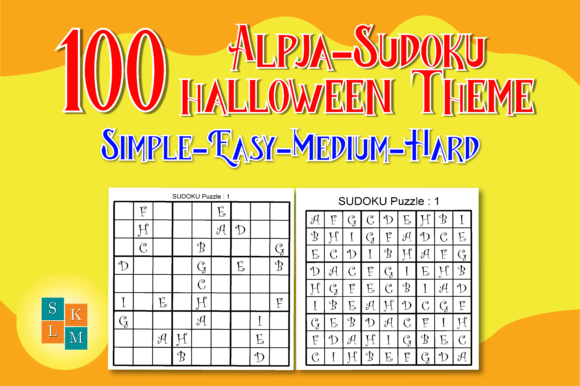
Sudoku has long been a staple of puzzle enthusiasts, but when you combine its logical structure with a Halloween twist and switch from numbers to letters, something fresh and unexpectedly engaging emerges. Halloween Theme Letter-Sudoku takes the classic 9x9 grid, replaces digits with the letters A through I, and wraps the whole experience in a spooky aesthetic that appeals to both puzzle lovers and seasonal enthusiasts. Whether you are a teacher looking for classroom activities, a KDP publisher building a unique product line, or simply someone who enjoys thoughtful, themed puzzles, this format offers new creative and commercial possibilities.
What Makes Letter-Sudoku Different from Traditional Number Puzzles
At first glance, a letter sudoku puzzle functions identically to its numeric cousin. Every row, column, and 3x3 subgrid must contain each letter from A to I exactly once. The logic remains the same, but the shift from numbers to letters changes how solvers engage with the puzzle. Letters carry semantic weight. A grid filled with A, B, C, and D feels more like a word game waiting to happen, even though no actual words are formed. This subtle psychological shift makes letter sudoku feel less mathematical and more accessible to people who might be intimidated by number puzzles.
For the Halloween theme, this distinction matters. The letters can be rendered in a spooky, gothic, or whimsical font that reinforces the seasonal mood without compromising readability. The result is a puzzle that feels like part of a haunted story rather than a math problem. This opens the door for themed collections that stand out on platforms like Amazon KDP, where buyers are looking for seasonal content that feels special and thoughtfully produced.
Why Halloween Theme Letter-Sudoku Is Gaining Attention
The puzzle market has seen a steady shift toward themed and niche products. Generic sudoku books still sell, but buyers increasingly want something that reflects their interests, holidays, or personal style. Halloween, in particular, is a massive niche. People decorate their homes, plan parties, and seek themed activities for all ages. A Halloween letter sudoku book fits naturally into this ecosystem. It offers quiet, focused entertainment during a season that is often loud and sugar-fueled.
Educators also find value in themed puzzles. Halloween classroom activities need to be engaging but also structured. A letter sudoku puzzle teaches logical reasoning, pattern recognition, and patience, all while feeling like a treat rather than a lesson. Teachers appreciate materials that are ready to print, clearly formatted, and visually aligned with the holiday. The spooky font adds atmosphere without distracting from the puzzle logic, making it suitable for upper elementary through high school students.
From a market perspective, Halloween-themed content has a predictable, annual demand spike from September through October. For KDP publishers, this creates a reliable window to promote seasonal puzzle books. Unlike evergreen puzzles, themed books can be promoted aggressively in a short period, and if the quality is high, they often generate repeat customers who return for other holidays or difficulty levels.
The Evolution of Themed Puzzles in a Digital and Print World
Puzzles have been around for over a century, but the way we consume them has changed dramatically. The rise of print-on-demand platforms like Amazon KDP has lowered the barrier for creators to publish niche puzzle books. Where previously a publisher needed to commit to large print runs, now anyone can create a Halloween letter sudoku book and have it available globally within days. This shift has led to an explosion of creativity in puzzle design, with themes ranging from holidays to hobbies to pop culture.
Letter sudoku itself is not new, but its application as a themed product is still underexplored. Most sudoku books use numbers, and most themed puzzle books stick to word searches or crosswords. There is a gap in the market for logic puzzles that feel festive. Filling that gap with a well-designed product, complete with a spooky font, clear rules, and a range of difficulty levels, positions a creator as thoughtful and responsive to what buyers actually want.
For educators, the evolution is also significant. Printable puzzle packs have become a go-to resource for substitute teachers, after-school programs, and homeschool parents. A PNG file at 300 DPI means the puzzles print cleanly at any size, whether used on a tablet, a classroom worksheet, or a family activity sheet. The demand for no-prep, high-quality, themed educational materials continues to grow, and Halloween letter sudoku fits squarely into that trend.
Practical Implications for KDP Publishers and Creators
If you are creating a Halloween letter sudoku book for KDP, the interior design is just as important as the puzzles themselves. A book with 100 puzzles and 100 solutions, divided into simple, easy, medium, and hard levels (25 each), provides structure and progression. Solvers can start with simple grids to learn the letter-based logic and build confidence before tackling the harder ones. This progression is key to keeping readers engaged through the entire book.
File format matters. PNG at 300 DPI ensures crisp renders on both screen and paper. For KDP, you want interiors that look professional when previewed on Amazon and print cleanly when ordered. A spooky font can be used for the puzzle grids, the rules page, and even the solution keys, as long as readability remains the priority. The font should evoke Halloween without sacrificing clarity. Gothic or decorative serif fonts often work well, but avoid overly ornate scripts that make it hard to distinguish letters.
Adding festive elements to the interior page elevates the product from generic to memorable. Consider including a small Halloween icon next to each puzzle number, a subtle border with bats or pumpkins, or a themed header on each page. These details do not affect the puzzle logic but they create a cohesive visual experience. Buyers notice when a book feels designed rather than assembled. For a holiday product, that feeling of care and attention translates directly into reviews and repeat purchases.
Classroom and Group Use: Practical Recommendations
Teachers and group leaders should consider printing puzzles at slightly larger sizes than standard books. A PNG at 300 DPI gives you the flexibility to enlarge puzzles to 8.5 x 11 or even 11 x 17 without losing quality. This is especially useful for classrooms where students may be working in pairs or groups. The letter format also reduces the common confusion between similar-looking numbers like 6 and 9 or 1 and 7, which can trip up younger solvers.
For classroom use, having four difficulty levels means you can differentiate instruction. Simple puzzles work well for students new to logic puzzles, while medium and hard puzzles challenge experienced solvers. The Halloween theme adds intrinsic motivation. Students who might resist a standard worksheet are often more willing to engage when the material feels like a seasonal activity. The spooky font contributes to the atmosphere without making the puzzle harder to solve, as long as letters remain distinct.
Consider creating a puzzle packet that includes a cover page with a brief explanation of letter sudoku rules and a Halloween-themed example. This makes the product self-contained and easy to distribute. If you are selling on Teachers Pay Teachers or similar platforms, the PNG format allows you to offer both individual puzzle downloads and full collections. Many educators prefer to buy a complete set and print only the puzzles they need, so a 100-puzzle collection with solutions is an attractive value proposition.
Building a Unique Product That Stands Out
The puzzle market is crowded, but specificity is your advantage. A Halloween letter sudoku book with a spooky font, four difficulty levels, and carefully designed interiors is not a generic product. It is a targeted solution for people who want seasonal logic puzzles they cannot find elsewhere. The key is to make every element intentional. The font, the page borders, the puzzle numbering, the solution layout, and even the table of contents should reinforce the theme.
For KDP, the interior file should be prepared as a single PDF or a set of high-quality PNG pages. Many creators use Canva, Adobe InDesign, or Affinity Publisher to lay out their puzzles, ensuring consistent spacing and alignment. Each puzzle should fit on one page, with the solution on a separate page or grouped at the back. Clear labeling of difficulty levels helps buyers navigate the book. A brief rules page at the front, written in plain English with an example, ensures that even first-time letter sudoku solvers can jump in without confusion.
One often overlooked detail is the solution key. Make sure solutions are printed clearly and accurately, using the same spooky font if possible. Nothing frustrates a solver more than a solution that is hard to read or, worse, contains errors. Double-check every puzzle and solution pair. For a 100-puzzle book, this is time-consuming but essential. A reputation for accuracy is invaluable, especially on KDP where reviews directly impact visibility.
Why This Matters for the Broader Puzzle Community
Themed puzzles have a way of bringing new people into the hobby. Someone who picks up a Halloween letter sudoku book on a whim might discover they enjoy logic puzzles and seek out more. This expands the market for all puzzle creators. By investing in high-quality themed products, you are not just selling a book, you are cultivating a solver who may become a lifelong customer. The Halloween theme acts as an entry point, and the solid puzzle design ensures they stay.
For educators, the availability of themed logic puzzles means they can offer variety without sacrificing educational value. A classroom that rotates between number sudoku, letter sudoku, word searches, and crosswords keeps students engaged across multiple types of thinking. Letter sudoku, in particular, strengthens letter recognition and pattern matching, skills that are foundational in early literacy and problem-solving. The Halloween theme makes the activity feel like a celebration rather than a drill.
Creators who take the time to add interior page elements, choose appropriate fonts, and structure difficulty levels thoughtfully are building a body of work that can be adapted for other holidays and themes. Valentine's Day, Christmas, Easter, and even back-to-school seasons all offer opportunities for similar puzzle books. The format you develop for Halloween can be repurposed with new fonts, colors, and icons, saving time and ensuring consistent quality across your product line.
Practical Tips for Getting Started
Begin by generating or curating 100 letter sudoku puzzles with a grid size of 9x9 using letters A through I. Divide them evenly into simple, easy, medium, and hard categories. Simple puzzles should have more given letters, while hard puzzles should have fewer and require more advanced logic such as pointing pairs or X-wing patterns. If you are not a puzzle constructor yourself, consider hiring a freelancer or using puzzle generation software that supports letter-based grids and allows you to export solutions.
Once the puzzles are ready, design the interior pages using your chosen spooky font. Keep the grid lines clean and the numbers or letters well-spaced. Add subtle Halloween elements like a small spider web in the corner or a pumpkin icon next to the difficulty label. These touches should enhance, not distract. Save each page as a PNG at 300 DPI to ensure print quality. Assemble the pages in order: title page, rules, puzzles grouped by difficulty, then solutions.
If you are publishing on KDP, you will need to upload a print-ready PDF or PNG sequence depending on your chosen method. KDP accepts PDF interiors with embedded fonts or flattened images. PNG files can be used if you are creating a low-content book, but for a puzzle book with 100 pages, a single PDF is more practical. Ensure your file meets KDP's trim size and bleed requirements.
Finally, write a product description that clearly communicates what buyers get: 100 Halloween-themed letter sudoku puzzles, four difficulty levels, a spooky font, and complete solutions. Emphasize the unique theme and the care put into the interior design. Use keywords naturally, focusing on terms buyers might search for such as Halloween puzzle book, letter sudoku, spooky logic puzzles, and themed activity book for adults and kids.
Halloween Theme Letter-Sudoku is more than a seasonal novelty. It is a well-structured logic puzzle that happens to wear a costume. For the creator, it is a chance to build something unique that meets a real demand. For the solver, it is a fresh way to enjoy a classic format. And for educators, it is a tool that makes learning feel like a celebration. With careful design, accurate puzzles, and attention to the user experience, this format can become a staple of your puzzle collection year after year.